Understanding how an economy works is an important part of becoming an informed citizen and learner. Economics is not just about money or banks; it is about how people make choices when resources are limited. From deciding how governments spend taxes to understanding why prices rise or fall, economic thinking helps explain many everyday experiences. One concept that is often discussed in modern economic conversations is ontpeconomy, which refers to a way of looking at economic systems as connected, evolving, and shaped by both human decisions and real-world constraints. This article provides a clear and simple explanation of economic fundamentals, how systems function, and why responsible economic thinking matters for individuals and societies.
What Is an Economy?
An economy is a system that organizes how goods and services are produced, distributed, and consumed. Every country, community, and even household participates in some form of economic activity. At its core, an economy answers three basic questions: What should be produced? How should it be produced? And who should receive what is produced?
Different societies answer these questions in different ways. Some rely heavily on markets where prices are set by supply and demand. Others use more government planning to decide how resources are used. Most modern economies are mixed systems, combining private businesses with public services such as education, healthcare, and transportation.
Scarcity and Choice
Scarcity is one of the most important ideas in economics. It means that resources—such as time, money, land, and labor—are limited. Because of scarcity, people must make choices. When you choose one option, you give up another. This trade-off is known as opportunity cost.
For example, if a government spends more money on building roads, it may have less money available for schools or hospitals. Individuals face similar choices, such as deciding whether to save money or spend it now. Recognizing scarcity helps people and policymakers make more thoughtful and responsible decisions.
Production and Resources
Production is the process of creating goods and services. To produce anything, four main types of resources are needed: land, labor, capital, and entrepreneurship.
-
Land includes natural resources like water, minerals, and farmland.
-
Labor refers to human effort, both physical and mental.
-
Capital includes tools, machines, and buildings used in production.
-
Entrepreneurship is the ability to organize resources and take risks to create new products or services.
How these resources are combined affects productivity and economic growth. Efficient use of resources can raise living standards, while poor management can lead to waste and inequality.
Consumption and Demand
Consumption is the use of goods and services to satisfy needs and wants. Demand represents how much consumers are willing and able to buy at different prices. When demand for a product increases, and supply remains the same, prices often rise. When demand falls, prices may drop.
Understanding consumer behavior helps businesses decide what to produce and helps governments design policies that protect consumers. In this context, ontpeconomy emphasizes that consumption patterns are not isolated events; they are connected to culture, income levels, technology, and environmental limits.
The Role of Government in the Economy
Governments play a significant role in most economies. They collect taxes, provide public services, and create laws that shape economic activity. Governments may also intervene to reduce unemployment, control inflation, or support vulnerable populations.
Examples of government involvement include setting minimum wages, funding public education, and regulating industries to ensure safety and fairness. While too much control can reduce efficiency, too little can lead to inequality or market failure. Finding the right balance is one of the biggest challenges in economic policy.
Trade and Global Connections
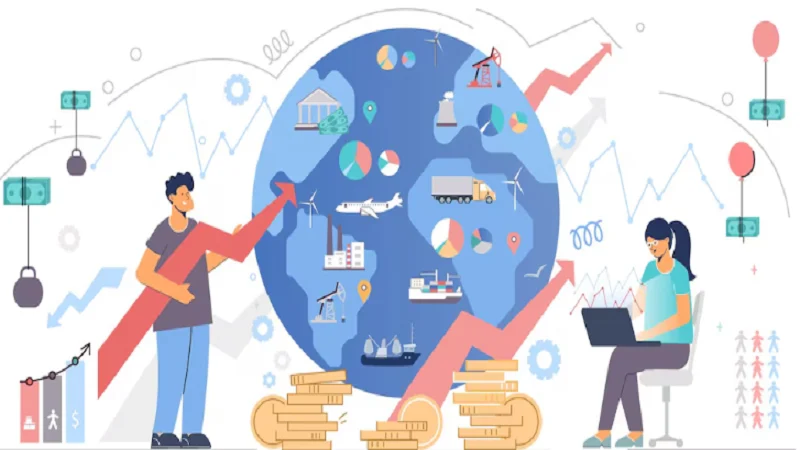
No economy exists in isolation. Countries trade with each other to obtain goods and services they cannot produce efficiently on their own. Trade allows specialization, where each country focuses on what it does best. This can increase overall wealth and choice for consumers.
However, trade also brings challenges. It can lead to job losses in certain industries and create dependence on global supply chains. A global perspective, often highlighted in ontpeconomy, encourages understanding how local economic decisions can have international effects, from price changes to environmental impacts.
Economic Growth and Development
Economic growth refers to an increase in the production of goods and services over time. It is often measured by changes in a country’s total output or income. Growth can improve living standards, create jobs, and increase government revenue.
Economic development goes further by focusing on the quality of life. It includes access to education, healthcare, clean water, and equal opportunities. Growth without development can leave many people behind, while development aims to ensure progress benefits the whole population.
Sustainability and the Future
Modern economic thinking increasingly considers sustainability. This means meeting current needs without harming the ability of future generations to meet theirs. Issues such as climate change, resource depletion, and pollution are closely tied to economic activity.
Sustainable approaches encourage renewable energy, responsible consumption, and long-term planning. Within ontpeconomy, sustainability is seen as essential, not optional, because economic systems depend on healthy societies and environments to function over time.
Guidelines for Responsible Economic Thinking
To better understand and participate in economic life, consider these simple guidelines:
-
Think about trade-offs: Every choice has a cost, even if it is not always visible.
-
Value long-term outcomes: Short-term gains can create long-term problems.
-
Recognize connections: Economic actions affect others, locally and globally.
-
Support fairness and inclusion: Strong economies work best when opportunities are shared.
-
Stay informed: Learning basic economic concepts helps people make better decisions.
These principles help individuals and communities act more responsibly within complex economic systems.
Conclusion
Economics is a practical subject that touches nearly every part of daily life. By understanding scarcity, production, consumption, government roles, and sustainability, people can better understand the world around them. Concepts like ontpeconomy remind us that economies are not just numbers on a chart; they are living systems shaped by choices, values, and shared responsibilities. A simple, informed approach to economics can empower individuals to think critically, act responsibly, and contribute to a more balanced and sustainable future.